
Reimagining Leadership in the Face of Change, Scale, and Opportunity
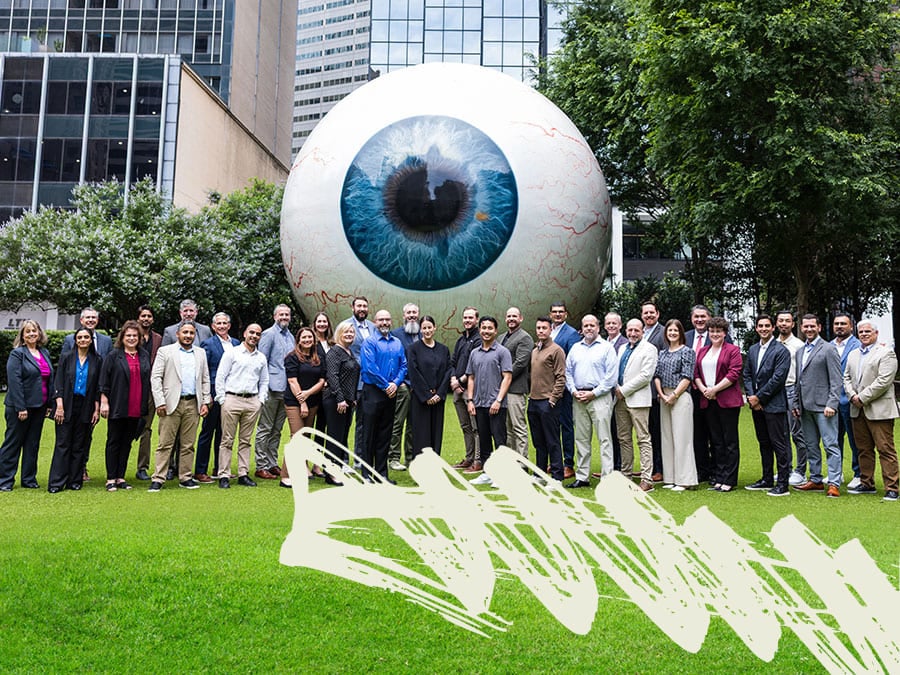
This May in Dallas, we brought together the founders, CEOs, GMs, presidents, and senior leaders from across the Exa Capital portfolio for our 2025 Leadership Conference, a gathering dedicated to reimagining leadership in today’s rapidly evolving business landscape.
Held at The Joule, the event featured candid conversations, practical workshops, and insightful keynotes focused on what it truly takes to build high-performing, resilient software companies, especially in times when the only constant is change.
Throughout the week, sessions explored critical themes that define the trajectory of modern business. Discussions around scaling through uncertainty echoed a shared reality – that growth rarely follows a straight line
Scaling Through Uncertainty
In a world where volatility is the only constant, learning how to scale in uncertain conditions has become a core leadership challenge. Companies that grow successfully through ambiguity tend to prioritize agility over perfection, decentralization over bureaucracy, and experimentation over rigidity.
As a result, companies today must scale with agility, even when market conditions shift overnight. This requires clarity in vision, confidence in execution, and the courage to make decisions before every answer is known.
Driving Growth Through Structured Independence
The importance of data-driven decision-making stands out. In a world full of noise and prevailing uncertainty, data offers the signal – a clear path to be precise. Organizations that embrace metrics over instincts, and insights over opinions, can move faster, make better decisions, and course-correct with intention. Knowing how to use data to drive outcomes across functions, from product to finance to people, is key in today’s business landscape.
In his keynote, Exa Capital CEO Omer Sajid made a compelling case for decentralization in his session, “Trust, Autonomy, and Speed: The Business Case for Decentralization.” He emphasized how empowering local leadership creates operational speed, customer intimacy, and a culture of accountability that’s hard to match.
“Exa’s decentralized model isn’t just a structure – it’s a philosophy,” Omer shared. “We empower the people closest to the customer, which allows us to scale with trust and accountability.”
M&A Strategy as a Growth Lever
Sessions on effective M&A strategies helped demystify the process for growth-stage companies. M&A is often seen as a technical exercise, but it’s also deeply human. Success lies in cultural fit, aligned vision, and a clear plan to integrate while respecting autonomy. Leaders shared how thoughtful deal execution and post-merger clarity can unlock real value and create lasting momentum.
Moreover, mergers and acquisitions continue to be a key growth lever, but in today’s time and market, success depends on far more than financial alignment. Effective M&A requires cultural integration, operational clarity, and a thoughtful roadmap to value creation.
- Done well, it unlocks scale, talent, and market access.
- Done poorly, it can introduce friction, stall momentum, and erode trust.
For business leaders and investors alike, mastering the art of integration is critical.
Marketing for Growth in a Fragmented Landscape
When it came to marketing for growth, leaders shared how storytelling, targeting, and customer insight play a central role in accelerating go-to-market efforts. The landscape is competitive, and growth doesn’t happen by accident. However, it’s calculated. It’s the result of deeply understanding your customer, aligning internal teams, and creating marketing strategies that do more than just attract – they convert.
Needless to say, marketing is maturing from a support function to a strategic growth driver. Whether it’s positioning a new product, building trust in a niche market, or driving demand in saturated categories, growth-focused marketing demands cross-functional alignment and a deep understanding of the buyer journey. The stakes are undoubtedly high, and the brands that outperform are those that align message with mission, and channels with customer behavior.
The Real Impact of Talent-First Organizations
Another major focus was building talent-first organizations – companies that prioritize people not just as assets, but as the heart of the business. In today’s knowledge-driven economy, putting talent first shows authentic leadership – it’s the engine behind innovation, retention, and culture.
Put simply, it’s a long-term differentiator. The strongest organizations are the ones that actively invest in leadership development, create clarity around roles, and align incentives with performance, having foresight or being ready for what comes next.
Lessons from Industry Leaders
One of the most talked-about moments was a fireside chat with Savneet Singh, President and CEO of PAR Technology. He walked through PAR’s transformation from a legacy hardware company to a modern SaaS business, reflecting on lessons learned in cultural alignment, navigating technical debt, and building recurring revenue with discipline.
His reflections were both inspirational and practical. Perhaps a reminder that transformation isn’t only about tools or structure, but about the mindset of the people driving the change.
Read the fireside chat summary with Savneet Singh for insights on leading through transformation, modernizing legacy systems, and navigating the emotional side of change.
Read the full Q&A with Savneet Singh!
Embracing AI and Leading Through Change
The conversations during the conference also turned toward the future, and how AI is reshaping business operations across industries. Whether it’s customer support, product recommendations, or predictive analytics, AI is becoming a current-day advantage. Yet, to fully harness its potential, organizations must approach AI with clarity, ethics, and alignment across leadership.
What We Learned
From the power of structured independence to the urgency of data-driven strategies and the evolution of leadership itself, the sessions revealed a common thread: strong businesses are built on clarity, trust, and execution.
At the same time, panels on navigating organizational change reminded us that leadership is as much about empathy as it is about execution. Change is personal. Leaders must guide teams through uncertainty with communication, purpose, and a willingness to listen.
Every workshop, keynote, and fireside chat reinforced the idea that while tools and markets will evolve, the foundations of great leadership remain consistent – focus, people, and adaptability.
Call to Action with Vision
As we look to the future, the Exa Capital Leadership Conference 2025 reminded us that leadership is about building bridges between people, ideas, and opportunities. Founders and executives left Dallas not just with strategies, but with a renewed commitment to lead with purpose, empower their teams, and shape the future of their businesses with clarity and courage.
Now, it’s time to put these insights into action and build companies that define change, not merely survive it.